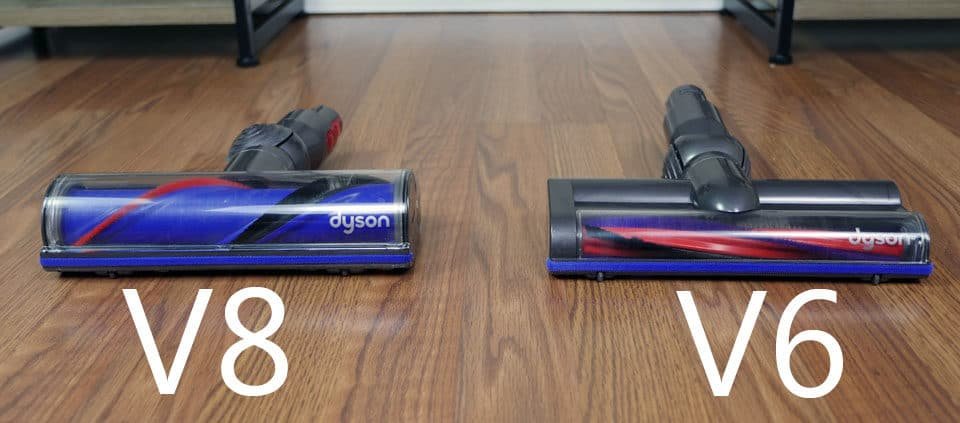
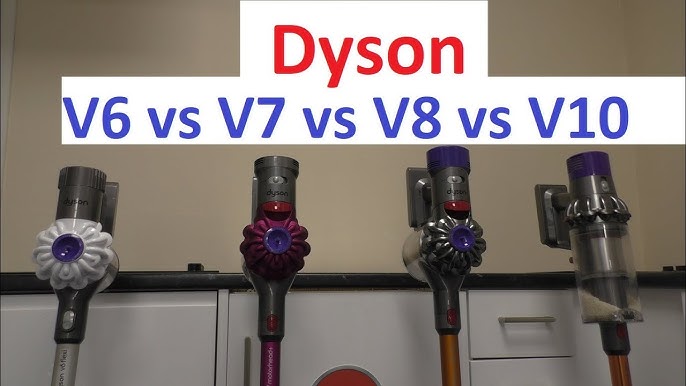
Stepping into the world of cordless stick vacuums can feel a bit like choosing between two seasoned runners: both have a strong legacy, but one might just have a newer stride. When it comes to the dyson v6 vs v8, you’re looking at two iconic stick vacuums that redefined how we clean. The V6 is the older, more budget-friendly workhorse, ideal for quick cleanups and smaller spaces, while the V8 is its refined successor, offering more power and a better overall user experience for those with larger homes or a higher budget. This isn't just a spec sheet comparison; I’ve put both of these through their paces in a real home, day in and day out, to truly understand which one fits different lifestyles and budgets.

Side-by-Side Specs Comparison
Before we dive into the nitty-gritty of daily use, let’s quickly glance at the core specifications. These numbers give us a baseline, but the real story unfolds when you actually get these stick vacuums into your hands and put them to work. It’s about how these specs translate into actual cleaning power and convenience.
| Feature | Dyson V6 (Typical Model) | Dyson V8 (Typical Model) |
|---|---|---|
| Price | $200-$350 (Refurbished) | $350-$500 |
| Suction (AW) | Up to 100 AW | Up to 115 AW (Max Mode) |
| Weight | Approx. 5.1 lbs | Approx. 5.75 lbs |
| Battery Runtime | Up to 20 mins | Up to 40 mins |
| Charge Time | 3.5 hours | 5 hours |
| Filtration | Post-motor filter | Whole-machine HEPA |
| Dustbin Size | 0.11 gallons (0.4 liters) | 0.14 gallons (0.54 liters) |
| Warranty | Varies (often 6 months refurb/1-2 years new) | 2 years (Parts & Labor) |

Unboxing and First Impressions
The moment the Dyson boxes landed on my doorstep, there was a palpable excitement. Unboxing the Dyson V6, I was struck by its compact design. Everything felt neatly packed, and the vibrant colors immediately caught my eye. Assembling it was straightforward; a few clicks and it was ready. Holding it, the V6 felt surprisingly light, almost like a toy compared to bulkier corded vacuums I'd used before. The plastic had a solid feel, but I couldn't help but wonder about its long-term durability. My first power-on with the V6 was a bit startling – it had a distinct, high-pitched whir that let you know it meant business, but it was certainly present in the room.
Then came the Dyson V8. The packaging felt a bit more premium, a subtle hint at its newer generation. Assembling the V8 was just as easy, a testament to Dyson’s intuitive design. Picking it up, I noticed a slight increase in weight compared to the V6, but it still felt perfectly balanced and easy to maneuver. The materials on the V8 seemed a tad more refined, with a slightly more robust finish that instilled a bit more confidence. When I turned on the V8, the difference was immediate: it was noticeably quieter than the V6, a welcome relief, and the motor sound had a deeper, more powerful hum. It felt like I was holding a more serious piece of cleaning equipment right from the start.
Cleaning Performance
This is where the rubber meets the road, or rather, where the spinning brush head meets the floor. I put both the Dyson V6 and V8 through a rigorous cleaning gauntlet, tackling everything from daily dust bunnies to stubborn pet hair across various surfaces in my home. The difference in their cleaning performance became quite clear, showcasing where each cordless vacuum truly shines.

On Hardwood Floors
The Dyson V6 glided across my hardwood floors, picking up everyday crumbs and dust with ease. The soft roller attachment, if you had one, was excellent at capturing fine particles without scratching. However, if I encountered slightly larger debris, like dried cereal, the V6 sometimes pushed it around a bit before finally sucking it up. It did a decent job for quick cleanups.
The Dyson V8, on the other hand, felt a step above. Its motor seemed more adept at creating consistent suction, effortlessly dealing with everything the V6 handled, plus those trickier, larger bits of debris. The improved torque drive cleaner head on some V8 models meant it had a better seal with the floor, which translated to more efficient pickup on hardwood. There was less "chasing" of crumbs.

On Low-Pile Carpet
For low-pile carpets and area rugs, the V6 did a respectable job. It managed to lift surface dirt and light debris, and the motorized cleaner head agitated the fibers enough to pull out embedded particles. However, I often found myself needing to go over the same spot a couple of times, especially in high-traffic areas. The battery life became a factor here, as thoroughly cleaning a few rooms meant I was pushing its limits.
The V8 felt more substantial on low-pile carpet. Its increased suction power was evident, and the cleaner head seemed to dig deeper into the fibers. It pulled up more dirt in a single pass, making the cleaning process quicker and more satisfying. I noticed less fatigue during longer cleaning sessions because I didn’t have to work as hard to get the carpet looking clean.
On High-Pile or Thick Carpet
This was the V6’s biggest challenge. On my thicker area rugs, the V6 struggled. The brush roll sometimes seemed to bog down, and the suction power just wasn't quite enough to extract deeply embedded dirt or debris. I often felt like I was just skimming the surface, leaving a lot behind. This was definitely not its strong suit, and the battery would drain exceptionally fast trying to cope.
The V8 significantly outperformed the V6 on high-pile carpet. While still a stick vacuum and not a dedicated upright, it managed to agitate and extract much more effectively. The stronger motor and redesigned cleaner head meant the brush bar could power through the thicker fibers without getting bogged down as easily. It still wasn't like a full-sized corded vacuum, but for a cordless stick, it was impressively capable.

Pet Hair
As a pet owner, pet hair pickup is a non-negotiable feature. The V6 handled pet hair reasonably well on hard floors and low-pile carpet for surface hair. However, if hair was matted into upholstery or deeper in carpet fibers, it often left some behind. The hair also tangled around the brush bar quite quickly, requiring frequent manual cleaning, which was a bit of a nuisance.
The V8 was a definite winner for pet hair. Its stronger suction and more robust cleaner head did a much better job of pulling up embedded fur from both carpets and upholstery. I found less hair clinging to the brush bar, and when it did, the design made it a little easier to detangle. It tackled my dog's shedding much more effectively, making weekly cleanups less of a chore.

Fine Dust and Allergens
Both vacuums do a decent job with visible dust, but fine dust is another story. The V6 picked up fine dust effectively on the surface, but its basic filtration system meant that some of the ultra-fine particles might be expelled back into the air. If you're sensitive to dust or have allergies, you might notice this.
The V8, with its whole-machine HEPA filtration, was noticeably better at trapping fine dust and allergens. I felt the air quality was better after using the V8, especially in bedrooms. It truly sealed in the dust, preventing it from escaping back out. For allergy sufferers, this feature alone makes the V8 a far superior choice, providing peace of mind.
Edges and Corners
Edge cleaning can be tricky for any vacuum, and stick vacuums are no exception. The V6 did an adequate job along straight edges, but its cleaner head shape sometimes struggled to get right into tight corners. I often had to switch to a crevice tool to get those really stubborn bits of dust and cobwebs.
The V8's cleaner head design seemed slightly more refined for edge cleaning, offering a marginally better reach. However, like the V6, it still wasn't perfect, and I found myself reaching for the crevice tool for truly pristine corners. Both vacuums benefited greatly from their versatile attachments in these tight spots, turning them into effective handheld cleaners.
Suction Power and Motor
The engine of any vacuum is its motor, and this is where the dyson v6 vs v8 debate truly heats up. The Dyson V6 boasts a potent motor for its generation, delivering up to 100 Air Watts (AW) in max mode. When I hit that "max" button, I could feel the surge in power, and it certainly picked up more. However, this impressive boost came with a tradeoff – a significantly louder operation and a rapid drain on the battery, often giving me only a few minutes of that peak suction. For quick, intense bursts, it was great, but not for sustained cleaning.
Moving to the Dyson V8, the difference in its V8 digital motor was immediately apparent. It offers up to 115 AW in max mode, which on paper isn't a massive jump, but in practice, it feels more consistent and powerful. Crucially, the V8's "regular" cleaning mode felt as strong as, if not stronger than, the V6's max mode, but with a much longer runtime. The motor also sounded smoother and quieter, which made a huge difference during longer cleaning sessions. I noticed that the V8 maintained its suction consistency much better as the dustbin started to fill, whereas the V6 could feel a bit sluggish once it was more than half full. This improved motor and suction profile of the V8 meant less re-vacuuming and a more efficient clean overall.
Filtration and Air Quality
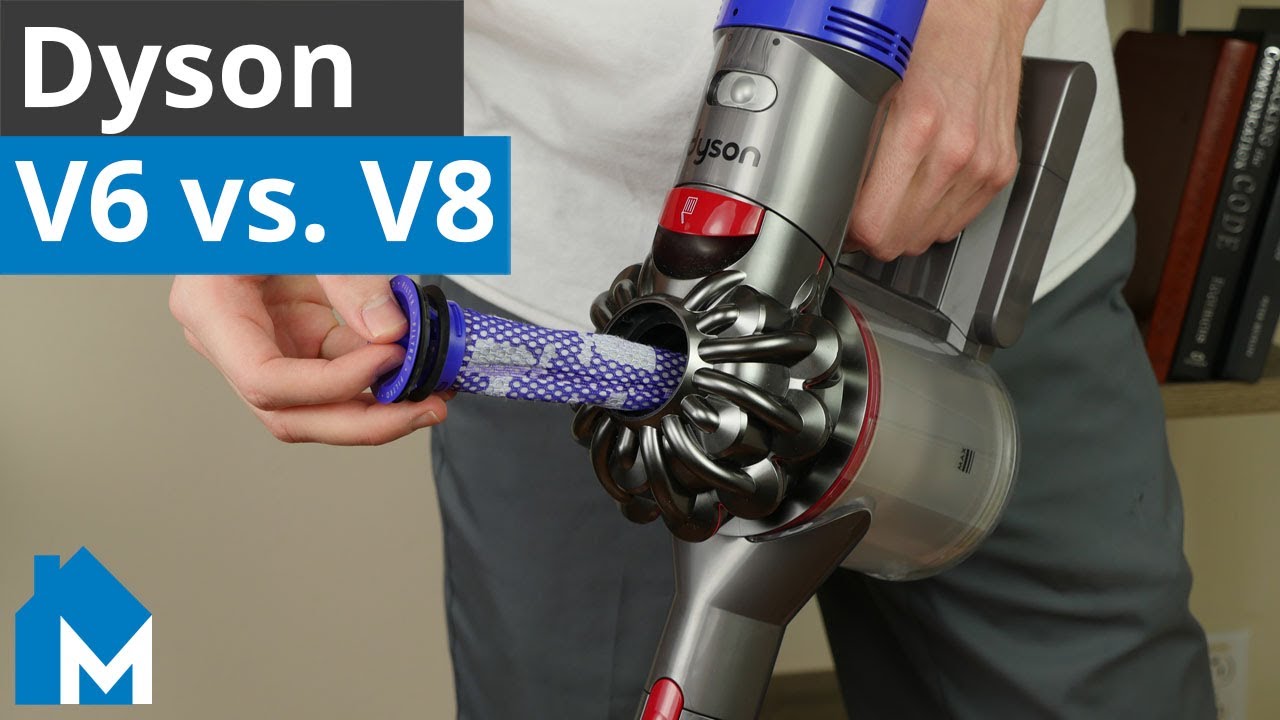
For anyone concerned about dust, allergens, or simply breathing cleaner air at home, a vacuum's filtration system is paramount. The Dyson V6 features a post-motor filter, which does a decent job of trapping larger dust particles. I found that while it kept most visible dust contained, there were times, particularly when emptying the dustbin, that I felt a puff of fine dust. For those with mild allergies, this might not be ideal, as it's not a fully sealed system. The filter requires regular cleaning, which meant a quick rinse under the tap every few weeks, and it definitely needed to dry completely before reinserting.
The Dyson V8, however, steps up its game with whole-machine HEPA filtration. This means the entire system, from the cleaner head to the motor, is sealed to prevent microscopic particles from escaping back into the air. As an allergy sufferer, I genuinely noticed a difference when using the V8. The air felt cleaner, and I experienced fewer post-vacuuming sniffles. It's designed to capture 99.97% of particles as small as 0.3 microns, including pollen, pet dander, and dust mites. Like the V6, its filter is washable, but the comprehensive sealing of the V8 provides a significant advantage for those looking to improve their indoor air quality. Filter replacement frequency is still similar, but the peace of mind knowing all those allergens are truly trapped inside is invaluable for pet owners and allergy sufferers alike.
Battery Life and Runtime
This is often the deal-breaker for cordless stick vacuums, and frankly, it's where the dyson v6 vs v8 diverge quite dramatically. With the Dyson V6, the advertised runtime of up to 20 minutes felt optimistic in my real-world experience. On standard suction mode with the motorized cleaner head, I typically got closer to 12-15 minutes. If I dared to hit the "Max" button, that runtime plummeted to a mere 5-7 minutes. This meant I often found the battery dying mid-room, leaving me scrambling for the charger and frustrated. Forgetting to charge it overnight almost guaranteed a dead vacuum in the morning, which was a constant minor annoyance. The battery is fixed, so no swapping, and replacement involves a service call or DIY part installation down the line, which can be costly.
The Dyson V8 brought a much-needed upgrade to battery performance. With an advertised runtime of up to 40 minutes, I consistently achieved around 25-30 minutes on standard mode with the motorized cleaner head. This was a game-changer; I could easily clean multiple rooms or even a whole small apartment on a single charge without feeling rushed. Max mode still reduced the runtime significantly, usually to about 7-8 minutes, but even that was an improvement over the V6. The V8’s battery also offers a more consistent power output, so I didn't experience the noticeable drop in suction in the last 10 minutes of charge that the V6 often suffered from. Charging time for the V8 is longer at 5 hours compared to the V6's 3.5 hours, but the doubled runtime makes that trade-off entirely worth it. The V8's battery is also integrated, but its longevity and improved performance make it a far more practical choice for everyday cleaning.
Design and Build Quality
The overall feel and construction of a vacuum heavily influence the user experience. Both the Dyson V6 and V8 share a similar sleek, futuristic aesthetic characteristic of Dyson, but there are subtle yet significant differences in their design and build quality that become apparent with repeated use.
| Feature | Dyson V6 (Typical Model) | Dyson V8 (Typical Model) |
|---|---|---|
| Body Material | Durable plastics, often bright colors | More refined plastics, often metallic accents |
| Handle or Grip | Ergonomic pistol grip | Ergonomic pistol grip, slightly heavier but balanced |
| Weight Distribution | Balanced for handheld use | Slightly heavier but very well balanced |
| Dustbin Design | Push-button bottom empty | 'Point and shoot' hygienic ejector |
| Wand/Attachments | Clicks into place | Clicks into place, slightly more robust feel |
| Charging Method | Wall-mounted dock, plug-in | Wall-mounted dock, plug-in |
| Portability | Very lightweight, easy to carry | Lightweight, slightly more robust feel |
Both models use durable plastics for their main body, but the V8 often features a slightly more refined finish and sometimes metallic accents that give it a more premium look and feel. The pistol grip is ergonomic on both, making them comfortable for one-handed operation, but the V8, despite being slightly heavier, feels incredibly well-balanced, which minimizes wrist fatigue during longer cleaning sessions.
The dustbin design is one of the most significant practical improvements in the V8. The V6 requires you to push a button on the bottom, which releases the flap, often resulting in a cloud of dust and debris falling out, sometimes sticking to the bin itself. It often felt like a slightly messy affair. The V8 introduces a "point and shoot" hygienic ejector mechanism, where you pull a lever up, and the entire shroud moves, pushing the debris out and down into the bin more cleanly. This was a huge relief, especially for those of us prone to sneezing fits from dust. The wand and attachments on both connect with satisfying clicks, but the V8’s connections felt a touch more secure and robust, giving a sense of greater longevity. Both charge via a wall-mounted dock, which is convenient for storage and ensuring the vacuum is always ready to go.
Maneuverability and Ergonomics
A stick vacuum's primary appeal is its ease of use and ability to navigate various spaces. Both the Dyson V6 and V8 excel here, but they offer slightly different experiences. The Dyson V6 is incredibly lightweight and agile. Its lighter frame makes it a dream for quick, short bursts of cleaning. I found myself grabbing it constantly for small spills or to zip around the kitchen floor. It pivots beautifully, allowing me to snake it around chair legs and under low furniture with minimal effort. Converting it to handheld mode is seamless, just a quick click, making it perfect for above-floor cleaning or tackling car interiors. However, because it's so light, it could sometimes feel a little less substantial when tackling tougher messes on carpet.
The Dyson V8, while a bit heavier than the V6, is still remarkably lightweight and incredibly well-balanced. That slight increase in weight actually lends it a more planted feel, especially when you're pushing it across carpets. Its head articulation is just as good, allowing for precise steering around obstacles. The balance of the V8 is genuinely impressive; despite its slightly larger battery and motor, it doesn't feel top-heavy, making it comfortable to hold for extended periods. This improved balance, combined with its longer battery life, meant I could clean larger areas without feeling that familiar wrist fatigue that sometimes crept in with the V6 during longer sessions. Both vacuums transform effortlessly into handhelds, but the V8's stronger motor and longer runtime made its handheld mode even more versatile for tasks like cleaning upholstery or reaching high shelves.
Dustbin and Maintenance
Keeping a cordless vacuum performing optimally relies heavily on its maintenance, and the dustbin is usually the most frequent point of interaction. The Dyson V6 has a 0.11-gallon dustbin, which, for quick cleanups, is perfectly adequate. However, if you have pets or a larger area to clean, you’ll find yourself emptying it quite often. The emptying mechanism involves pressing a button on the bottom of the bin, which opens a flap. While simple, I often found dust clinging to the sides or even falling onto the outside of the bin, necessitating a quick wipe-down. It wasn’t the most hygienic experience, and for those with allergies, it could kick up a small dust cloud. The filter on the V6 is washable, and I’d typically rinse it monthly, ensuring it was completely dry before reinserting. The brush bar required occasional untangling of long hair, which was a standard chore for stick vacuums.
The Dyson V8 features a slightly larger 0.14-gallon dustbin, which translates to a bit more cleaning time before needing to empty. But the real game-changer is its "point and shoot" hygienic emptying mechanism. You simply pull a red lever upwards, and the entire cyclone shroud lifts, cleanly pushing out the debris from the bin and preventing dust from getting trapped. It genuinely feels more hygienic and makes a noticeable difference in preventing dust dispersal. This design improvement alone is a compelling reason to consider the V8. Like the V6, the V8’s filter is washable, and I followed a similar monthly rinsing schedule. Cleaning the brush roll was also a routine task, but the V8’s design felt a little more robust, making it slightly easier to access and clear tangled hair when needed. The improved dustbin design definitely streamlines the maintenance routine, making the V8 a more user-friendly option for daily chores.
Attachments and Versatility
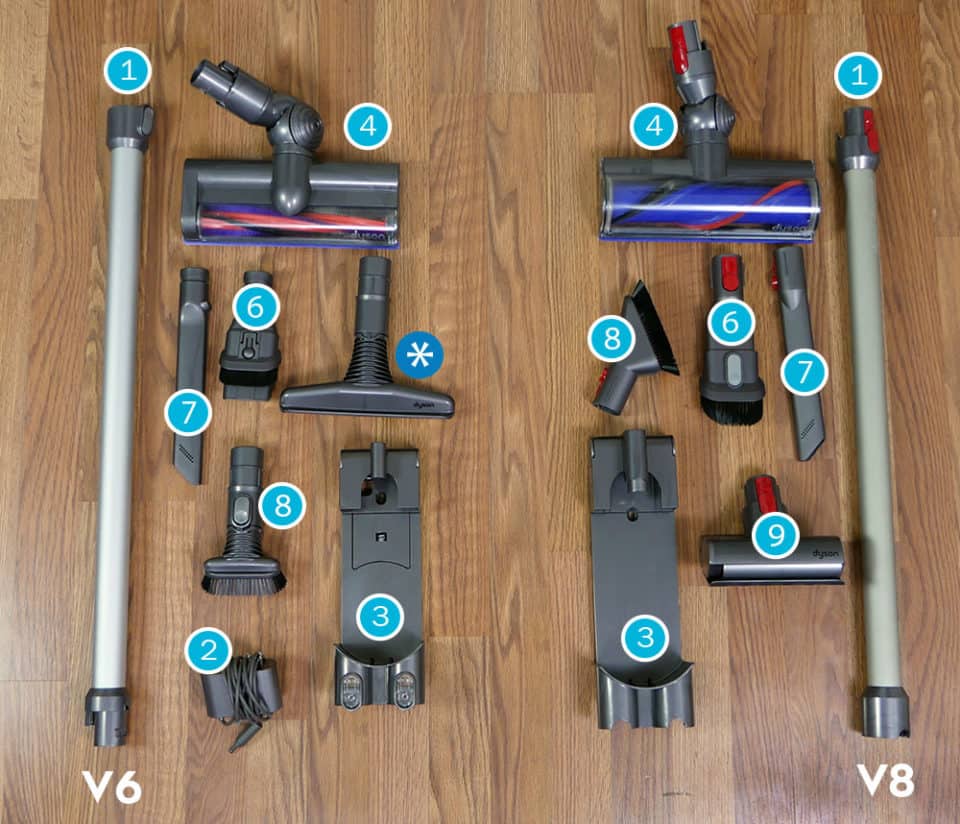
The true magic of a Dyson stick vacuum often lies in its array of attachments, transforming it from a floor cleaner into a versatile tool for your entire home and even your car. Both the Dyson V6 and V8 typically come with a good selection, though the exact tools can vary by specific model (e.g., Animal, Absolute).
With the Dyson V6, I usually found the main motorized cleaner head, a crevice tool, and a combination tool (brush/wide nozzle). These were generally sufficient for most tasks. The crevice tool was a lifesaver for getting into tight gaps between sofa cushions or along baseboards. The combination tool was handy for dusting shelves or quickly vacuuming upholstery. Swapping between attachments was quick and easy, with a satisfying click. The versatility allowed me to clean my car interior fairly effectively, though the V6's shorter battery life sometimes meant I couldn't get everything done on one charge.
The Dyson V8 typically includes similar core attachments, but often adds a soft roller cleaner head for hard floors (excellent for fine dust) and sometimes a mini motorized tool specifically designed for pet hair on upholstery. The soft roller head for hard floors on the V8 was a revelation; it gently picked up everything without scattering. The mini motorized tool was particularly effective at lifting pet hair from sofas and car seats, significantly outperforming the V6's standard tools in that specific task. All V8 attachments also feel a bit sturdier and more refined, clicking into place with a more secure fit. The extended battery life of the V8 meant I could tackle more demanding, longer tasks, like a full car detail or thoroughly cleaning multiple upholstered furniture pieces, without worrying about it running out of juice. This enhanced suite of tools and improved battery life makes the V8 noticeably more versatile for a wider range of cleaning scenarios.
Noise Level
Nobody wants a vacuum that sounds like a jet engine taking off in their living room. Noise level is an often-overlooked aspect, but it significantly impacts the cleaning experience, especially if you have sensitive ears, small children, or pets. The Dyson V6, to be frank, is quite loud. When running on its standard mode, it produces a distinct, high-pitched whine that can be rather grating, especially in smaller, enclosed spaces. If I engaged the "Max" power mode, the noise level jumped considerably, making conversation difficult and definitely making my pets nervous. It's the kind of noise that makes you want to get the cleaning done as quickly as possible just to turn it off.
The Dyson V8 represents a substantial improvement in noise reduction. Dyson engineered the V8 to be noticeably quieter, thanks to improved acoustic design and noise-dampening materials around the motor. While it's still a vacuum cleaner and not silent, its sound is much more subdued, a deeper hum rather than a high-pitched shriek. I could comfortably have a conversation or listen to music while cleaning with the V8 on standard mode, and even its "Max" mode was less intrusive than the V6’s standard operation. This quieter performance makes a huge difference in the overall comfort of cleaning, turning a noisy chore into a more tolerable task. For anyone living in an apartment or with noise-sensitive individuals, the V8's quieter operation is a significant advantage.
Price and Value for Money
When comparing the dyson v6 vs v8, price is often the deciding factor for many. The Dyson V6, being the older model, is considerably more affordable. You can often find refurbished or older stock V6 models for anywhere between $200-$350. At this price point, it offers excellent value for a genuine Dyson cordless vacuum. It's a great entry into the Dyson ecosystem for those on a tighter budget who need a powerful handheld and a competent stick vacuum for quick, light cleanups. Its value comes from its accessibility and the fact that it still delivers good suction for its age. However, you're compromising on battery life, noise, and some filtration features.
The Dyson V8, on the other hand, typically retails for $350-$500, placing it in a higher price bracket. While a larger upfront investment, the V8 offers significantly enhanced features: double the battery runtime, notably quieter operation, stronger and more consistent suction, whole-machine HEPA filtration, and a much more hygienic dustbin emptying system. For me, the extra investment in the V8 translates into better long-term value. The increased runtime means I can clean more without interruption, the improved filtration provides better air quality, and the quieter motor makes it more pleasant to use. If you have a slightly larger home, pets, allergies, or simply want a more premium and less frustrating cleaning experience, the V8 justifies its higher cost with these substantial quality-of-life improvements. It's a question of whether the additional features and convenience are worth the extra dollars for your specific home and cleaning needs.
The Verdict: Which Dyson V6 vs V8 is Right For You?
After countless hours of vacuuming with both the dyson v6 vs v8, their strengths and weaknesses have become incredibly clear. Neither is a bad vacuum, but they cater to different needs and budgets. It’s not just about raw power; it’s about how they integrate into your daily life and make cleaning feel less like a chore.
Choose the Dyson V6 if…
- You're on a tight budget: It's the most affordable entry point into Dyson's cordless vacuum range.
- You live in a small apartment or studio: Its shorter runtime is sufficient for quick cleanups in compact spaces.
- You primarily need a powerful handheld vacuum: The V6 excels at this, making it great for car interiors or spot cleaning.
- You don't have pets or severe allergies: Its basic filtration and moderate pet hair pickup will be fine for lighter needs.
- You don't mind frequent charging and a louder operation: You're willing to trade some convenience for the lower price.
- You need a secondary vacuum: Perfect for upstairs, the basement, or as a grab-and-go option.
Choose the Dyson V8 if…
- You have a medium to larger home (1000+ sq ft): The extended battery life makes it much more practical for thorough cleaning sessions.
- You have pets: Its stronger suction and often included mini-motorized tool handle pet hair far more effectively.
- You suffer from allergies: The whole-machine HEPA filtration system genuinely improves indoor air quality.
- You prioritize a quieter cleaning experience: The V8's reduced noise level is a significant upgrade.
- You want more consistent power and better overall performance: The V8 feels more robust and capable on all surfaces.
- You appreciate convenience and hygiene: The "point and shoot" dustbin emptying system is a game-changer.
- Your budget allows for a worthwhile upgrade: The additional features truly justify the higher price tag.
Frequently Asked Questions (FAQ)
Is the Dyson V6 still worth buying in 2024?
The Dyson V6 can still be a worthwhile purchase in 2024, especially if you find it at a significantly reduced price or refurbished. It's an excellent option for quick, small cleaning tasks, like spills in the kitchen or tidying a small apartment. Its powerful handheld mode remains very effective for car cleaning or upholstery. However, be mindful of its limitations: shorter battery life, louder operation, and less advanced filtration compared to newer models. If these compromises don't bother you and the price is right, it still holds up for light duty.
How long do Dyson V6 and V8 batteries last before needing replacement?
The lifespan of Dyson batteries largely depends on usage and charging habits, but typically, you can expect a Dyson V6 battery to last anywhere from 2 to 4 years. The V8 battery, being a newer generation, often has a slightly longer average lifespan, possibly 3 to 5 years, due to advancements in battery technology and charge management. Over time, both will gradually lose their capacity, meaning runtimes will shorten. Replacement batteries are available, though they can be a significant investment, especially for the V8.
Can the Dyson V6 and V8 be used for car cleaning?
Absolutely! Both the Dyson V6 and V8 are fantastic for car cleaning. Their ability to quickly convert into a handheld vacuum, combined with various attachments like the crevice tool and combination tool, makes them ideal for reaching tight spots, cleaning floor mats, and vacuuming upholstery. The V8, with its longer battery life and often included mini motorized tool (great for pet hair in cars), offers a more thorough and less rushed car cleaning experience. The V6 will also do a great job, but you might need to recharge it if you're doing a full interior detail.
Final Thoughts
Navigating the dyson v6 vs v8 comparison has been a journey through two generations of stick vacuum evolution. The V6, while no longer at the cutting edge, remains a testament to Dyson's initial cordless innovation. It's a no-frills, powerful little cleaner perfect for quick tasks and smaller homes, especially if budget is your absolute priority. Its snappy performance for short bursts and its grab-and-go convenience still make it a viable choice for many.
However, the Dyson V8 stands out as the clear winner in terms of overall user experience and performance. The significant leap in battery life truly transforms it from a "spot cleaner" to a primary household vacuum for many. Coupled with its quieter operation, superior filtration, stronger suction, and that wonderfully hygienic dustbin, the V8 addresses almost all the pain points of its predecessor. It feels like a more complete and refined cleaning tool that makes the chore feel less like a chore. For anyone seeking a versatile, efficient, and user-friendly cordless vacuum that offers genuine quality-of-life improvements, the V8 is undoubtedly the smarter, long-term investment. Ultimately, your choice boils down to your specific home, cleaning habits, and how much you're willing to invest in a smoother, more powerful cleaning experience.